Skip to content

A New Push to Streamline Clean Energy Permitting in California: What SB 1097 Could Mean

Rows of solar panels and wind turbines stand in a field at sunset, with the sky glowing orange and the sun low on the horizon, surrounded by trees and greenery.

At the end of March, Senator Scott Wiener introduced SB 1097, a bill aimed at accelerating the development of clean energy infrastructure in California. The bill focuses on streamlining permitting under the California Environmental Quality Act (CEQA) for a range of energy projects—an issue that has long been viewed as a bottleneck for the state’s ambitious climate goals. While its ultimate impact will depend on how the bill evolves, SB 1097 signals a meaningful shift in how California may balance…

Continue Reading

San Francisco Water Board Releases Updated Environmental Screening Levels

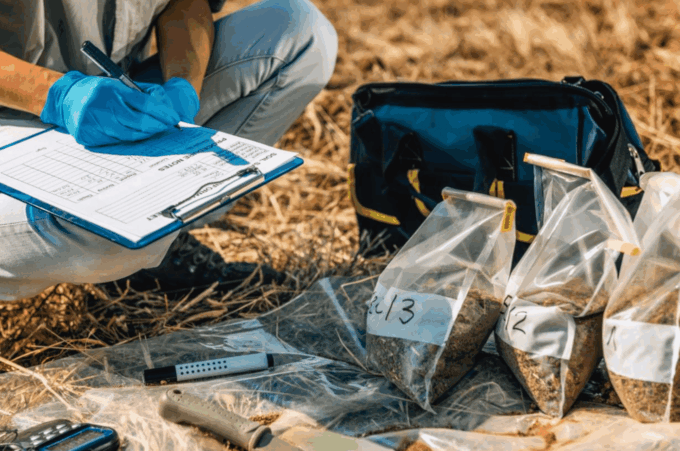
A person wearing blue gloves kneels on dry grass, writing on a clipboard beside plastic bags filled with soil samples, a black bag, and scientific equipment.

The San Francisco Regional Water Quality Control Board (SFRWQCB) released updated Environmental Screening Levels (ESLs) dated July 18, 2025. This is the first update to the ESLs since 2019 and notably includes soil and groundwater ESLs for 14 new PFAS chemicals as well as updated soil and groundwater cancer risk ESLs for PFOA and PFOS. The newly updated ESLs for PFOA are even more conservative than the interim soil screening levels released by the SFRWQCB in May 2020, with some…

Continue Reading

Prioritizing Infill Housing Over CEQA – Governor Signs AB 130 and SB 131

Modern apartment buildings with large glass windows, balconies, and outdoor lights illuminate the area at dusk. A curved walkway with railings leads past landscaped areas in the foreground.

The California Environmental Quality Act (CEQA) is often cited as a barrier to addressing California’s housing crisis. On June 30, 2025, the Governor signed AB 130 and SB 131, both effective immediately.  These laws aim to clear regulatory bottlenecks, offer relief from environmental review for qualifying projects, and provide new tools to keep housing development on track. AB 130 continues the Legislature’s effort to remove barriers to housing development, notably by creating a new statutory housing exemption under CEQA and…

Continue Reading

The Supreme Court’s NEPA Spring Clean Up: Seven County Infrastructure Coalition

On May 29, 2025, the United States Supreme Court unanimously pruned back what they deemed decades-long overgrowth of the National Environmental Policy Act (NEPA). Justice Kavanaugh, writing the majority opinion, asserted that NEPA, “a 1970 legislative acorn[,] has grown over the years into a judicial oak that has hindered infrastructure development ‘under the guise’ of just a little more process.” Seven County Infrastructure Coalition v. Eagle County, Colorado, 605 U.S. 1, 13 (2025). In Seven County, petitioners challenged the U.S…

Continue Reading

More Notice Required for Zone Changes Affecting Permitted Uses

Assembly Bill 2904 (AB 2904), authored by Assemblymember Quirk-Silva and effective as of January 1, 2025, amends Government Code Section 65854 to modify the notice requirements for public hearings concerning proposed zoning ordinances and amendments that affects the permitted uses of real property. The bill extends the minimum notice period from ten (10) days to twenty (20) days. Although AB 2904 does not define what types of zone changes would affect permitted uses of real property, it likely includes, but…

Continue Reading